


The short answer
The right suburb depends on your family’s week—not which town wins an online list. Mount Eliza, Mount Martha and Mornington can each work for families with school-age children, but none guarantees an easier school run, faster commute or better value. A street close to the services you actually use may matter more than the suburb name. Test three realistic addresses against the same checklist before choosing.
If you’re relocating from Melbourne, start with the non-negotiables: an actual school plan, the number of Melbourne work trips each week, budget including upkeep, how children reach sport or friends and which risks you will not accept.
Three locations, three different research questions
| Decision | Mount Eliza: test | Mount Martha: test | Mornington: test |
|---|---|---|---|
| School plan | Which schools are genuinely available, and from which pockets? | What does the precise morning/pickup route require? | Does the chosen street support the school’s actual daily schedule? |
| Melbourne work | How does the drive/connection work on your real travel days? | Is the coastal trade-off acceptable for the return journey? | Do the specific transport and parking options fit your schedule? |
| Weekday life | Are the services you need accessible from the actual street? | Does beach/coast preference create extra daily driving? | Do shops, activities and services fit the planned household routine? |
| Property choice | What is available at your price and condition standard? | What upkeep comes with your preferred property? | Are you comparing equivalent stock and total costs? |
| Deal breakers | School eligibility or transport assumption unverified | Routine relies on a second car or uncertain pickup | Property or location still fails the family’s priorities |
This is an investigation matrix, not independent suburb rankings. Always compare homes and addresses you could really purchase.
Who may prefer Mount Eliza?
Mount Eliza isn’t one market. It has at least five distinct precincts, and each has its own entry price and price ceiling, its own mix of residents and its own way of life. Where your budget stretches, and the home and lifestyle it buys, depends on which precinct you look in. BuyerX can help match those precincts to your family’s needs.
Although the suburb sits on the bay, many Mount Eliza homes have no water view and aren’t within walking distance of a beach. Buyers after a true sea change will find the areas that suit them are fairly small. Families who would rather walk to school, and are happy to drive to the beach and shops, have a much wider choice.
Whichever precinct you consider, proximity to a school does not establish admission or a government school zone. Verify the exact address and year on Find my School or check independent admissions directly. If a parent must reach Melbourne several days per week, test door-to-door at the relevant hours. Do not assume village proximity means a property is safely walkable for a child.
What could make you reject a Mount Eliza home? A school transfer that isn’t viable, a property that is too far from the weekly routine, or an all-in cost that leaves insufficient room for upkeep.
Who may prefer Mount Martha?
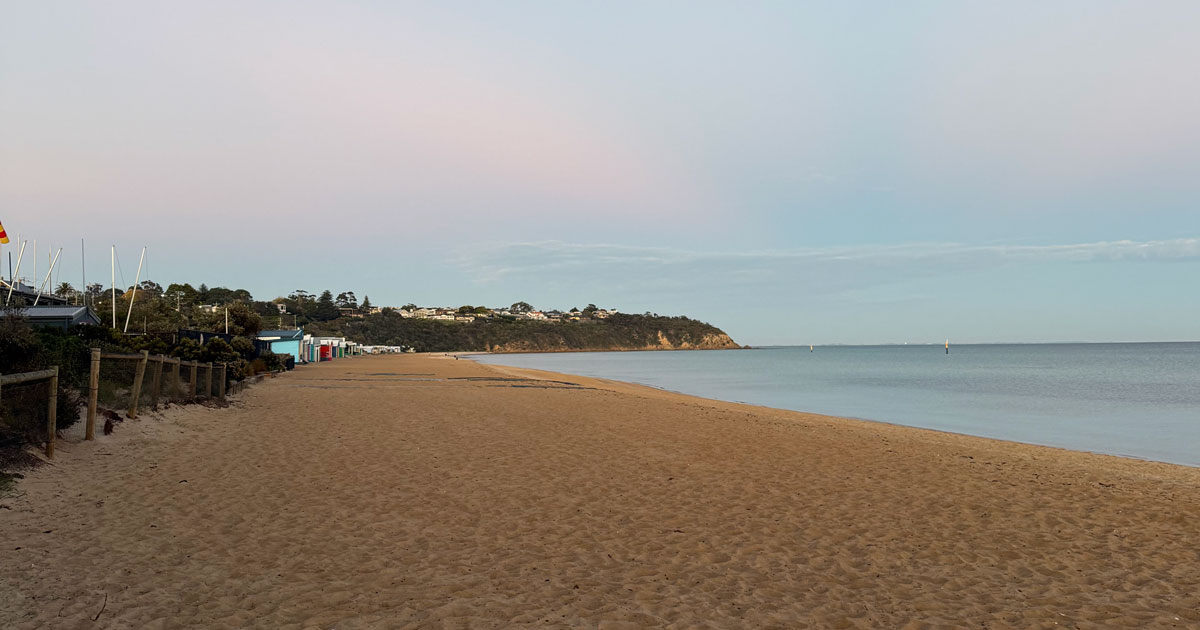
Of the three, Mount Martha has the most coastal feel and the strongest small-community atmosphere. Its main beach is, in our view, among the best on Port Phillip Bay. The strip-shopping village sits by the water, and the streets within about a 10-minute walk of it are reasonably level and easy to get around.
Many families move to Mount Martha for the beach lifestyle and a sense of distance from the everyday grind. Buyers can find a range of property types and features, such as bay views or homes within walking distance of beaches, kindergartens and schools. It is smaller than Mornington and Mount Eliza, yet it is a popular choice for families relocating from Melbourne who keep their jobs and commute.
That appeal doesn’t decide whether a particular street fits your school or work timetable. Outside the village’s walking radius, one street may feel convenient while another requires multiple car trips, even though both have the same suburb label. Walk the actual routes where safe, run the morning schedule and look at how teenagers will move around independently in a few years.
What could make you reject a Mount Martha home? An unworkable pickup/commute combination, uncertain future transport for teenagers, or a maintenance bill not allowed for in the purchase budget.
Who may prefer Mornington?
Like Mount Eliza, Mornington divides into at least five precincts, each offering a different lifestyle and different amenities. Values can change sharply over a short distance: the grand clifftop homes of Beleura Hill are only a 5 to 10-minute walk from homes worth around a tenth as much.
Mornington is the most cosmopolitan of the three, with plenty of restaurants and cafes, hospitals and accessible beaches. Beachside precincts such as Fishermans Beach and Mills Beach attract many downsizers, drawn by modern, low-maintenance homes close to shops and healthcare. Other precincts may suit a family better, and BuyerX can talk you through how each one fits the lifestyle you want.
The right answer still depends on micro-location and your school and work routine. It’s possible to prefer Mornington on paper, then find that a candidate property’s position or condition makes it less attractive than a practical home elsewhere. Compare real streets, not only the facilities in the town centre.
What could make you reject a Mornington home? A specific school journey that fails in practice, insufficient room or condition at the target budget, or an address too detached from the daily services you expected to use.
Four household scenarios: why the winner changes
Scenario A — Two Melbourne CBD office days plus primary-school pickups. Shortlist only properties for which drop-off and the return commute can work without heroics. The answer may depend more on the location of a school and availability of a second adult than on the suburb.
Scenario B — A family with secondary-school children. Prioritise verified school access, sport, friends and realistic independent transport over a generic family score. The location that felt ideal with a three-year-old may not suit a 15-year-old.
Scenario C — A family working locally. School and errand loops may matter more than the CBD journey. Compare the actual time required for groceries, healthcare, clubs and relatives before paying a location premium.
Scenario D — A family making a sea-change with a renovation budget. Assess condition, bushfire and planning constraints, land maintenance and insurance at property level. The visually most compelling home may have the largest hidden costs.
These are illustrative household scenarios, not testimonials or claims about BuyerX’s actual clients.
Schools: an address-specific check, not a suburb-level promise
If government schools are important, open the official Victorian Find my School tool for the target address and enrolment year. Check independent schools directly for admissions, transport, fees and waitlists. A mention of Toorak College, Peninsula Grammar, Balcombe Grammar, Frankston High School or Dromana Secondary College in an online article is not a promise of eligibility or admission. If a zone boundary is close, cross-check the displayed map and contact the relevant authority.
Melbourne travel: test the actual days
Don’t compare “20 minutes closer” figures without an origin, destination, timetable and departure time. Include parking, rail/bus transfers if relevant, walking and the effect on school collection. Record both an ordinary and disrupted day, then compare all three locations against that evidence. PTV provides current public transport route planning; test driving separately rather than quoting a fixed travel-time promise.
A$1.5m–A$2m budgets: compare like with like
If your search is in this band, compare properties that are truly available or have verifiable recent transaction evidence. Record usable bedrooms, renovation need, land size, location, future maintenance and transport costs. A town can appear “good value” only because you’re comparing a fully renovated home in one area with a property needing extensive work in another. A buyer’s advocate can help evaluate the trade-offs, but no online guide should manufacture a median price or promise what your budget can buy on a given date.
Real-world proof: why BuyerX first compared locations, not listings
BuyerX’s publicly documented 32 Bath Street, Mornington case is particularly relevant. Michael Sier and Jarrod Quint worked with a doctor relocating from New Zealand with children. The client’s concerns included the differences between parts of Mornington, Mount Eliza and Frankston South and schooling options. The case describes first working through those location decisions before narrowing inspections. It illustrates the benefit of testing a family brief rather than choosing a property because its listing is attractive. It does not prove a town is right for every buyer.
For a different household priority, the 20 Kilburn Grove, Mount Martha case concerns clients moving from the NSW Southern Highlands for retirement years. It demonstrates that a good location decision changes with life stage.
The same six-point scorecard for all three towns
Score each candidate home address from 1–5 with notes and evidence, then mark FAIL wherever a non-negotiable cannot be verified. Scores are planning aids, not scientific ratings.
| Dimension | Score 1–5 | Evidence needed |
|---|---|---|
| School routine | ___ | Confirmed zone/admission pathway; actual travel |
| Work commute | ___ | Real door-to-door weekday test |
| Everyday independence | ___ | Actual errand/sport/friends routes |
| Home and budget | ___ | Comparables, property condition, full costs |
| Property-specific risk | ___ | Planning overlays, title, insurance, inspections |
| Family preference | ___ | Every household member’s stated compromises |
The Tuesday Test: stop debating, start testing
Choose one realistic address in each location. Drive or travel the school/work routes at the hour you would really use them. Make the grocery/sport loop and check who needs the car. Run the official school lookup for each exact address. Compare equivalent active homes. Document one reason each location could fail your family’s brief. In many cases, this process turns “which suburb is best?” into an answerable shortlist.
What to do next
If you’re still torn between Mount Eliza, Mount Martha and Mornington, read Moving to the Mornington Peninsula with Kids. For an optional human conversation, contact Michael Sier at BuyerX Mornington Peninsula to book an optional 15-minute School & Suburb Shortlist conversation. Bring your broad school priorities, budget band, days commuting to Melbourne and expected move timeframe. Do not provide children’s names or sensitive information through an unsolicited message.
FAQs
Mount Eliza, Mount Martha or Mornington: which is best for families?
None is best without a particular household’s school, transport, budget and lifestyle requirements. Compare precise streets using the same evidence.
Which is closest to a preferred school?
A street can be physically close without being eligible for a government school or securing admission to a private school. Check official rules for your enrolment year.
Which has the best Melbourne CBD commute?
That depends on the actual address, workplace, mode and travel hours. Test complete door-to-door journeys before choosing.
Can a buyer’s advocate help before I find a home?
It’s actually the best time to begin your conversation with BuyerX. A local expert may help identify poor-fit areas, compare real trade-offs and set a practical search brief before inspections begin.
Can you promise a particular school or property?
No. School enrolment and property availability must be independently confirmed; a content guide and initial conversation are not guarantees.
Verified source starting points
- BuyerX — Michael Sier
- BuyerX — 32 Bath Street case
- BuyerX — 20 Kilburn Grove case
- Find my School, Victorian Department of Education
- PTV journey planner
- Victorian Planning Property Report
School eligibility, commute suitability and individual property risks must be verified against current official sources and professional advice.