Bayside - Spring 2026 Market Update
There is a strange dynamic playing out across the Bayside property market at the moment, and if you were simply looking at the headline data, I don’t think you would see it.
We have effectively developed a two-speed market.
Good homes are still selling exceptionally well. In some cases, they are getting smashed.
Average homes, or anything with a compromise, can sit there for weeks or months with very little urgency from buyers.
It is probably one of the bigger gaps I have seen between A-grade and B-grade property for some time, and it makes looking at median prices, clearance rates and even suburb-wide days on market figures somewhat misleading.
There is certainly still money around. Buyers just seem far more particular about where they are prepared to spend it.
The good homes are still flying
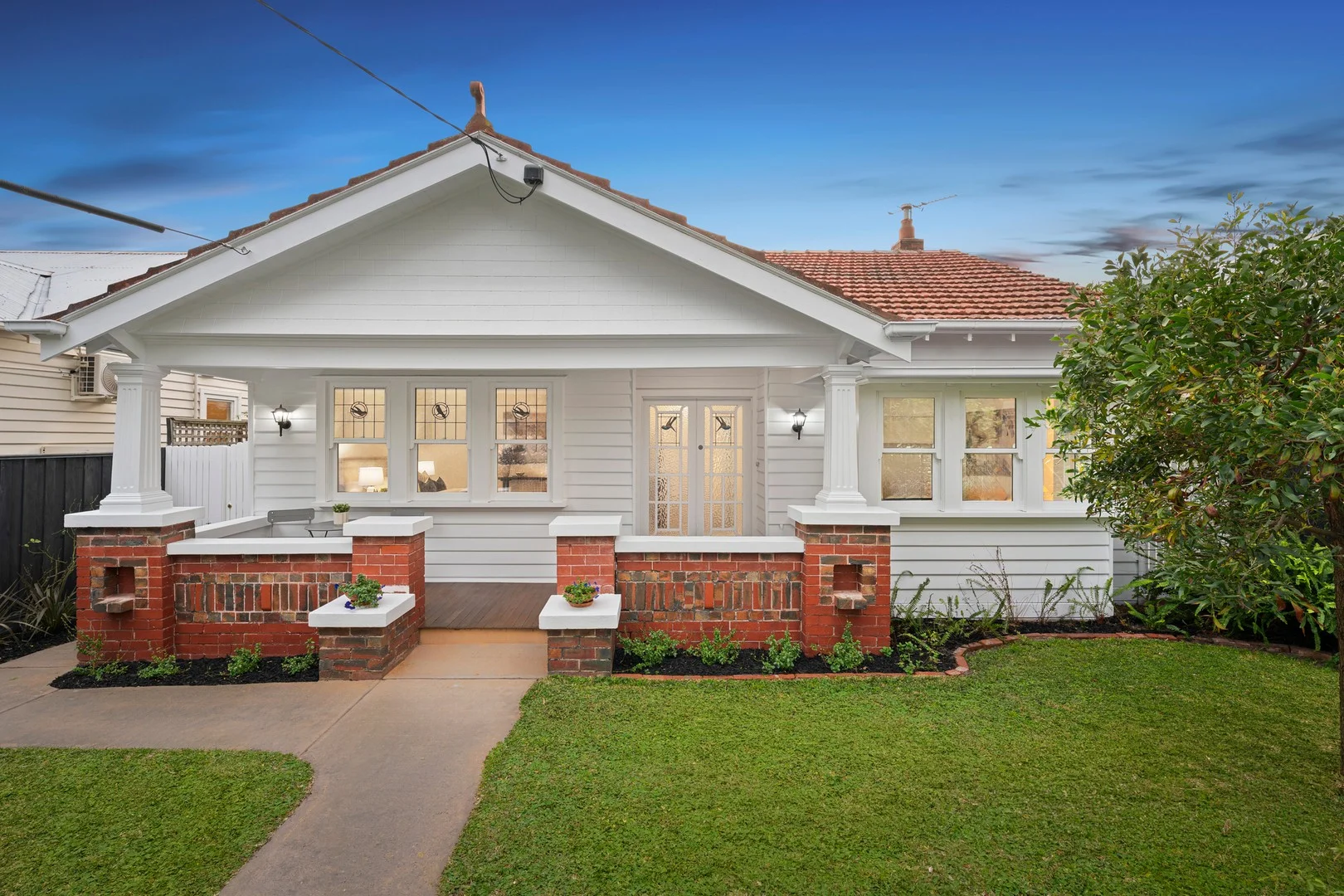
A good example was Susan Street in Sandringham on the weekend.
The property attracted four bidders at auction and sold for an undisclosed amount in excess of the top of the advertised range.
Interestingly, selling agent Richard Slade said to me prior to the auction, “I thought we would have 5 groups there but anticipated that most would keep their hands in their pockets…”
They didn’t.
And that probably sums up the market better than most statistics can at the moment.
Buyers are cautious right up until the point where they see something they really want. When a genuinely good property comes along, particularly one that is well located, well presented and doesn’t require significant work, that caution can disappear fairly quickly.
The problem is assuming that result then represents the broader market.
It doesn’t.
For every property like Susan Street attracting multiple bidders, there are plenty of others sitting on the market with buyers inspecting, thinking about it, and then doing absolutely nothing.
The $3 million buyer isn’t poorer, they’re pickier
One thing I don’t subscribe to is the idea that there is suddenly no money in Bayside.
There is.
There are currently numerous properties above $7 million attracting good enquiry, and we have recently seen a property in Lang Street, Beaumaris transact above $6 million.
At the other end of the spectrum, there are properties at significantly lower price points struggling to generate genuine competition.
The difference is quality.
Main roads, poor floorplans, bad orientation, lack of natural light, inferior positions and overcapitalised renovations are all being punished.
A couple of years ago, buyers might have accepted two or three compromises simply because they were worried the next property would cost them another $200,000.
That urgency isn’t there at the moment.
A buyer with $3 million to spend still has $3 million to spend. They are just much more comfortable keeping it in the bank until the right property comes along.
That is an important distinction.
Price guides are becoming increasingly unreliable
Another interesting feature of the current market is how little relationship there can be between the initial advertised price guide and the eventual transaction price.
And it is happening in both directions.
There are properties selling above their advertised ranges, particularly when multiple buyers identify the same quality attributes and competition takes over.
But there are also plenty of transactions happening below advertised expectations.
We recently purchased one ourselves for a client well below the advertised price guide.
This is why I have never liked the simplistic approach of taking an agent’s quote and adding 10 per cent to work out what a property is “really worth”.
Sometimes you might need another 10 per cent.
Sometimes the vendor would probably be delighted to get the bottom of the range.
The property doesn’t know what is written on the Statement of Information.
Buyers need to understand the actual market value of the home by analysing comparable sales, its scarcity, competition and the vendor’s circumstances.
Interestingly, we are also seeing buyers pull out once bidding or negotiations move beyond the advertised range because they are worried about overpaying.
That fear is quite powerful at the moment.
It means the market can occasionally present an opportunity where the difference between securing a property and missing it isn’t necessarily another $200,000 – it might only be having enough confidence in your valuation to keep bidding when everybody else stops.
The renovator’s delight isn’t the bargain it used to be
The other major adjustment I am seeing is with homes that aren’t move-in ready.
Building costs have obviously increased substantially over the past few years, but it isn’t just the construction cost buyers are considering.
There are holding costs, planning delays, uncertainty around the final build cost and the inconvenience of potentially spending 12 or 18 months undertaking the project.
Buyers are factoring all of this into what they are prepared to pay.
I’m not convinced all vendors have caught up.
There are still plenty of sellers whose price expectations appear to be based on what their home may have been worth last year, without accounting for the significant adjustment that has occurred for properties requiring substantial work.
This has created an unusual situation in some pockets of Bayside where I think buyers are arguably paying too much for land and not enough for completed homes.
Historically, buying the worst house in the best street and renovating it was almost considered a property investment rule.
Today, the numbers need to be looked at much more carefully.
If you can buy a finished home for $3 million, there isn’t necessarily value in paying $2.3 million for something that requires $800,000 worth of work – particularly once you account for stamp duty, holding costs, overruns and 18 months of your life.
And that gap between vendor expectation and buyer mathematics is one of the reasons we are seeing some properties sit.
Auction clearance rates aren’t telling the whole story
Auction clearance rates have long been treated as the weekly heartbeat of the Melbourne property market.
I’m becoming increasingly sceptical about how relevant they are in Bayside.
A growing number of quality properties, particularly at the upper end, are being sold via Expressions of Interest, private sale or off-market negotiations.
None of those transactions enter the auction clearance rate calculation.
Then there are EOI campaigns where the advertised closing date comes and goes, the property remains available and eventually disappears from the portals.
Did it sell? Was it withdrawn? Did the vendor reject the offers? Is it still available off-market?
The headline statistics don’t necessarily tell you.
Similarly, an auction campaign can be converted into a sale before auction, passed in and subsequently negotiated, or withdrawn altogether.
So when somebody tells me the clearance rate was X per cent on Saturday and therefore the Melbourne market is doing well or poorly, I think that needs to be taken with a fairly large grain of salt.
So where does that leave Bayside buyers?
For buyers, I actually think this is a very interesting market.
There is considerably less urgency around average property, which means there can be opportunities to negotiate strongly where a vendor’s expectations haven’t been met.
At the same time, buyers shouldn’t confuse a softer overall market with every property being negotiable.
The best homes are still attracting competition and, when something genuinely scarce comes along, you may need to move quickly and confidently.
The biggest risk at the moment is applying the same strategy to every property.
You can’t look at an A-grade home with four bidders and assume you have enormous negotiating power because another property around the corner has been sitting there for 90 days.
Likewise, you shouldn’t pay an aggressive price for a compromised home simply because an agent points to the result achieved for a superior property nearby.
Bayside isn’t one market at the moment.
It is increasingly a collection of individual markets, determined by property quality, location, price point and the depth of buyers for that particular home.
And right now, understanding which market the property you’re looking at actually belongs to is probably more important than any headline statistic.
Get in touch with Jack Johnstone to find out more about the Bayside market, or make an appointment to discuss your requirements and see how we can help you get into your ideal home sooner.
Read more about Jack Johnstone
-
 Melbourne Inner North – Spring 2026 UpdateRead Article
 -
 Boroondara – Spring 2026 Market UpdateRead Article
 -
 Boroondara – Winter 2026 Market UpdateRead Article
 -
 Boroondara – Autumn 2026 Market UpdateRead Article
 -
 Kingston – Summer 2024/25 Market ReviewRead Article
 -
 Boroondara – Spring 2024 Market ReviewRead Article
The first step in your property journey, whether it be buying or selling, is gaining clarity on your situation.