Melbourne Inner North - Spring 2026 Market Update
Quality still attracts competition in a selective market
Melbourne’s inner-north property market is offering buyers a more complicated picture than a simple boom or slowdown. Recent agency commentary points to cautious decision-making alongside continued competition for well-located, well-presented homes. The latest suburb statistics also show that prices and selling conditions can move in different directions.
For buyers searching across Fitzroy, Carlton North, Brunswick, Northcote, Thornbury and Coburg, the useful question is therefore increasingly specific: how competitive is the market for the particular home you want?
A renovated family home in a quiet street has a different buyer pool from a small apartment, a property on a main road or a house requiring substantial work. Treating these as one market can lead to misplaced confidence—or unnecessary hesitation.
Buyers are taking their time but quality still matters
In its recent article, A market regaining momentum, Nelson Alexander reports buyers approaching purchases thoughtfully while remaining ready to act on suitable opportunities. The agency identifies well-located, well-presented, move-in-ready homes as a particular focus of demand. It also reports fewer competing listings ahead of spring, although that observation should not be read as a measured October listing-volume figure.
For inner-north buyers, this suggests a practical distinction. A longer search and more careful assessment can coexist with a competitive campaign when a property satisfies several requirements at once.
The appeal is easy to understand: usable accommodation, natural light, outdoor space, parking and access to local amenities make a home easier to live in. Buyers should assess how well a property delivers those benefits before deciding whether its asking range represents value.
That assessment also needs to separate cosmetic presentation from underlying quality. Fresh paint and attractive styling deserve less weight than a functional floorplan, sound construction and a location that will continue to suit the household.
The statistics show activity rather than a uniform price surge
REIV suburb snapshots checked on 13 October show the following reported clearance rates and days on market:
| Suburb | Reported clearance rate | Days on market |
| Brunswick | 75.6% | 29 |
| Northcote | 74.4% | 29 |
| Thornbury | 72.4% | 31 |
| Coburg | 73.9% | 36 |
| Metropolitan Melbourne comparison | 69.4% | 45 |
These figures are rolling 12-month measures in REIV’s September 2026 data update. They are not last weekend’s results. Nevertheless, they show these four local markets recording higher clearance rates and shorter selling times than the metropolitan comparison.
The broader Victorian backdrop is more measured. REIV’s September bulletin reports 2,030 auctions in August, with 1,373 sales and a clearance rate of 67.6%. That leaves a meaningful proportion of campaigns unresolved through the reported auction process.
For buyers, neither statistic guarantees the outcome of an individual negotiation. A strong suburb clearance rate does not mean every home attracts multiple bidders, while a pass-in does not automatically mean a vendor will accept a substantial discount.
Median prices need careful interpretation
The same REIV snapshots display quarterly house median changes of positive 7.8% in Brunswick, negative 6.6% in Northcote, negative 11.7% in Thornbury and negative 5.6% in Coburg.
Those differences underline why broad claims about the inner north rising or falling can be misleading. They also require care: a median measures the middle transaction price and changes with the mix of homes sold. It does not establish that every Northcote house has lost 6.6% of its value.
REIV explicitly distinguishes medians from indices that adjust for property characteristics. Its methodology also allows rolling annual medians where quarterly sales samples are insufficient.
The implication is straightforward. Assess a target property against recent sales with similar land, accommodation, condition and street position. A suburb-wide percentage is background information, rather than a substitute for that work.
Local campaigns show where competition can concentrate
Recent results in neighbouring Eaglemont offer a useful example of demand for distinctive family homes, while remaining separate from the core inner-north market.
Nelson Alexander’s Ivanhoe team reports that three Eaglemont campaigns attracted a combined 259 inspection groups. Agent Christian Cortese noted 88 groups through 46 Ormond Road, a five-bedroom period residence on approximately 560 square metres; its four-week expressions-of-interest campaign concluded with three offers.
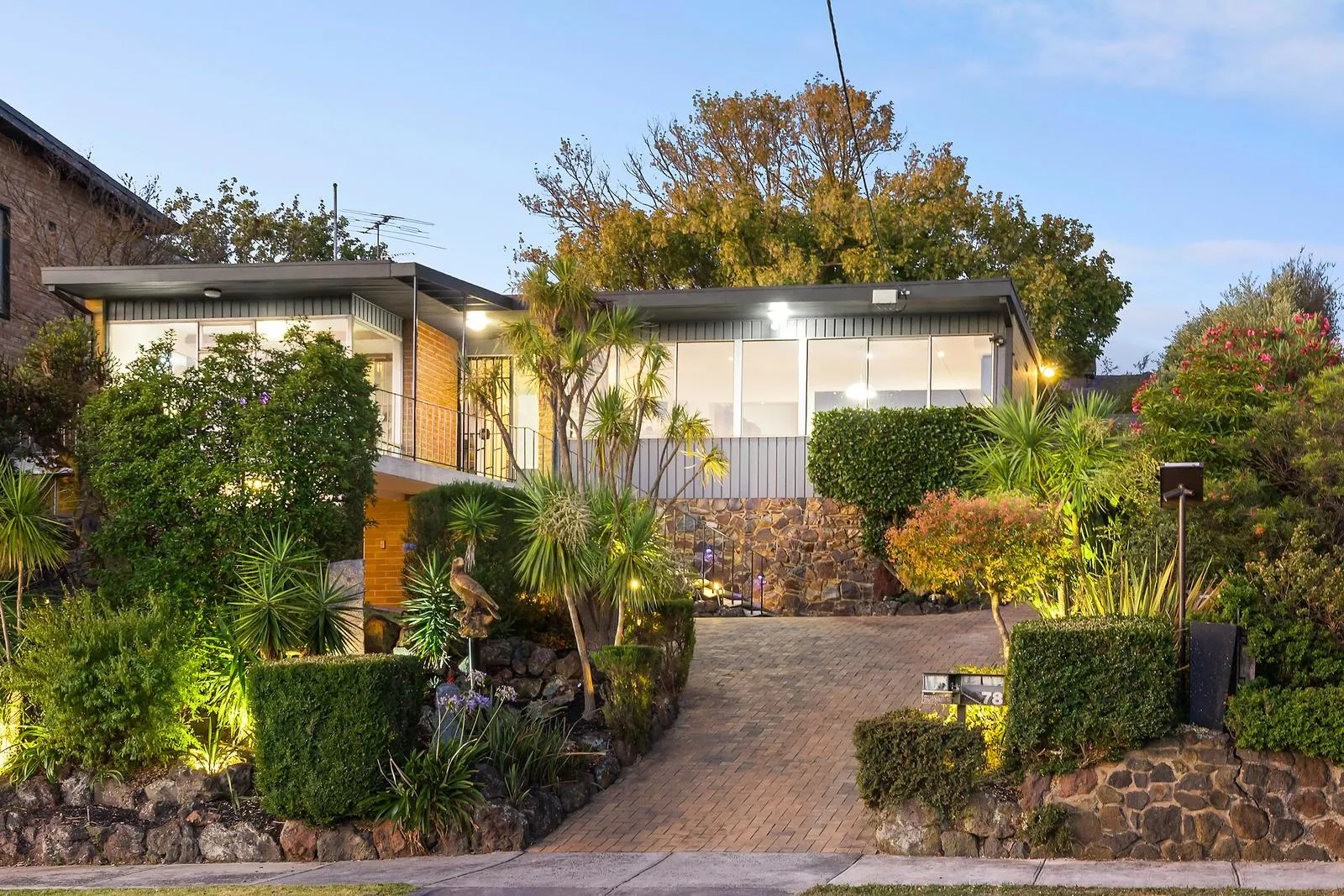
At 78 The Eyrie, Mark Verrocchi reported that inspecting buyers consistently remarked on the home’s panoramic views. That campaign attracted 89 groups, with the agency reporting a sale above the advertised range. James Labiris described 74 The Eyrie as “one of Eaglemont’s most iconic homes”; it attracted 82 groups and two offers.
These are selected agency-reported successes, not a representative market sample. Their value is in showing how distinctive attributes can attract substantial attention. They also demonstrate why inspection numbers should be distinguished from the number of buyers prepared to make an offer.
Off market access broadens the search
For our BuyerX Inner North & Inner West team, approximately 40% of purchase transactions have been off-market. That means around four in every ten purchases were secured outside a public sales campaign, highlighting the importance of including privately available homes in a comprehensive search. This is our team’s transaction figure, rather than an estimate for the broader Melbourne market.
For buyers, the useful lesson is to maintain a search beyond public listings. Clear briefs and consistent contact with local agents can uncover additional opportunities. Every privately offered property still needs comparable-sales analysis and due diligence; limited public exposure does not establish a bargain.
Buying well requires preparation and restraint
Taken together, the evidence supports a selective approach to Melbourne’s inner north. Buyers have reasons to negotiate carefully, but should also be prepared for competition when a home meets their needs unusually well.
Before a campaign reaches its decision point, establish the property’s likely value, investigate its condition and title, confirm finance and set a firm purchasing limit. Compare nearby alternatives on what they actually deliver, rather than assuming an adjoining suburb offers equivalent value.
The strongest position is to know which compromises are acceptable and what each should cost. That makes it easier to recognise a worthwhile opportunity—and to walk away when competition takes the price beyond what the property justifies.
Get in touch with Nuno, Kelly & Nicola to find out more about the Inner North/Inner West market, or make an appointment to discuss your requirements and see how we can help you get into your ideal home sooner.
Read more about Team Raimundo


-
 Boroondara – Spring 2026 Market UpdateRead Article
 -
 Bayside Property Market Update – Spring 2026Read Article
 -
 Boroondara – Winter 2026 Market UpdateRead Article
 -
 Boroondara – Autumn 2026 Market UpdateRead Article
 -
 Kingston – Summer 2024/25 Market ReviewRead Article
 -
 Boroondara – Spring 2024 Market ReviewRead Article
The first step in your property journey, whether it be buying or selling, is gaining clarity on your situation.